



Service Along the Nile International (SN), formerly the Swiss Evangelical Nile Mission (SENM), brings over four decades of dedicated service to marginalized groups. Established in 1900 in Aswan, Egypt, the mission expanded its work across several Nile Basin countries, including Ethiopia.
An inclusive and equitable Ethiopia where persons with disabilities and marginalized communities are empowered to live healthy, dignified, and self-reliant lives.
Christianity , Professionalism , Integrity, Commitment, Communication
Weinshet Mola was born in 2001 in East Welega Zone, Ethiopia. Blind from birth, her early life was shaped by resilience as much as by hardship. Despite her visual impairment, Weinshet began school like other children and showed strong determination to learn.
Her childhood, however, was marked by profound loss. She lost her mother to illness at a young age, and not long after, her father and brother were killed during an armed attack in her community. Suddenly left without immediate family support, Weinshet’s life was thrown into uncertainty.
With no stable home, she moved to live with her elderly grandmother in a rural town. Determined not to give up her education, Weinshet continued school under extremely difficult conditions—often living alone and struggling to meet her basic needs. A compassionate special-needs teacher recognized her potential and began supporting her with food and encouragement, refusing to let her fall through the cracks.
Through a network of concerned individuals, Weinshet’s story reached Misrach Crafts Training and Rehabilitation Center. In September, she was brought to Addis Ababa and enrolled in the Center’s social support and education program. The Center immediately responded—providing her with safe accommodation, educational materials, and enrollment at Menelik II School, where she resumed her formal education.
Today, Weinshet lives safely in the Center’s dormitory and continues her studies with renewed confidence and hope. She speaks with gratitude about the opportunity she has been given and dreams of becoming a lawyer, so she can advocate for justice and protect others who, like her, have experienced injustice and vulnerability.
Weinshet’s journey reflects the power of timely intervention, community care, and inclusive education. With the right support, even the most vulnerable can rebuild their lives and shape a future filled with purpose and dignity.
Farah Mekonen was born in Gedarif, Sudan, to Ethiopian parents. At the age of nine, following a severe illness, Farah lost his hearing. This life-changing event drastically limited his access to education, as there were no schools equipped to support deaf learners in his area. As a result, he was only able to attend formal schooling for three years.
Farah grew up in a large family with four sisters and two brothers. Despite strong family support, opportunities for education and employment for persons with disabilities—especially those with hearing impairments—were extremely limited. When conflict intensified in Sudan and livelihoods became increasingly unstable, Farah made the difficult decision to travel to Addis Ababa in search of work and a better future.
Life in the city was not easy. After months of searching, Farah was unable to find employment. Hope emerged when a deaf friend introduced him to Misrach Crafts Training and Rehabilitation Center. Encouraged, Farah applied, passed the entrance assessment, and was accepted into the Woodwork Training Program in the 2023/24 academic year.
Joining Misrach Center marked a turning point in Farah’s life. He received professional skills training, transport support, and a learning environment that respected his dignity and potential. The quality of training and level of support exceeded his expectations. For the first time, Farah felt fully included and empowered.
Beyond technical skills, Misrach Center became a place of belonging. During his training, Farah built strong friendships and formed a meaningful relationship with a fellow deaf graduate. The two are now engaged and supporting one another as they build their future together.
Farah successfully completed his training, passed the national Certificate of Competency (CoC) examination, and graduated with three certificates from the Center. With the support of his trainers, he has now secured employment with one of the furniture manufacturing companies that partners with Misrach Center.
Today, Farah is confidently employed, living independently, and planning a stable future with his fiancée. He describes Misrach Center as a place that gave him not only skills, but purpose, confidence, and hope.
“For me, Misrach Center is like a mother. It is where I found my direction in life. I thank God for every opportunity and for the support given to persons with disabilities.”
Farah’s story reflects the transformative power of inclusive vocational training—proving that with opportunity, support, and belief, persons with disabilities can thrive and contribute meaningfully to society.

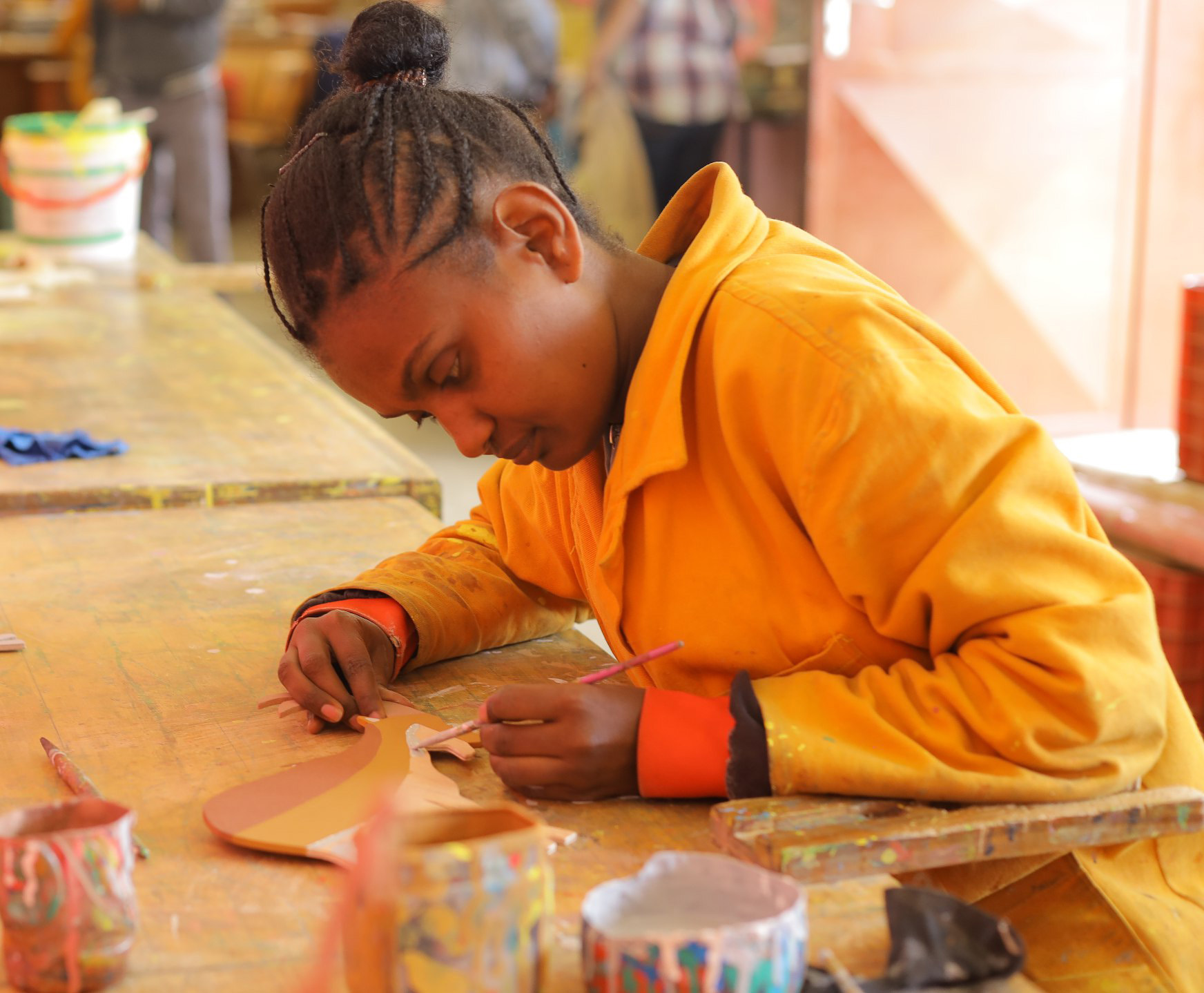
Girls proudly showing what they made
As the training progressed, the girls proudly displayed the items they created—evidence not only of new skills but also of growing self-confidence. These moments marked an important step toward independence and self-belief.
After completing her rehabilitation in April 2025, Shibere successfully reintegrated with her family. With rehabilitation support from the project, a cow was purchased to help her generate income and sustain her livelihood. Today, she is back with her family and moving forward with renewed stability.
Elfenesh completed her time at Tsegereda in June 2025 and relocated to Fite. She is now supported by members of the local church community, demonstrating the importance of strong community partnerships in ensuring long-term reintegration and care.
Beginning small-scale income generatio
In April 2025, Jalfal went to live with her aunt after completing the program. To support her reintegration, the project provided teff and baking materials, enabling her to bake injera and earn income through small-scale business activities.


Die Mission am Nil ist ein christliches Hilfswerk mit Projekten in den Bereichen Bildung, Ernährung, Frieden und Gesundheit.
Die Mission am Nil ist ein christliches Hilfswerk mit Projekten in den Bereichen Bildung, Ernährung, Frieden und Gesundheit.
Die Mission am Nil ist ein christliches Hilfswerk mit Projekten in den Bereichen Bildung, Ernährung, Frieden und Gesundheit.

Addis Ababa City Administration Women, Children and Social Affairs Bureau The rights and safety of women, children, disabled and the elderly in the city

Welcome to central Ethiopia, Regional Health Bureau. The Central Ethiopia region is a region located in the southwestern part of Ethiopia,